
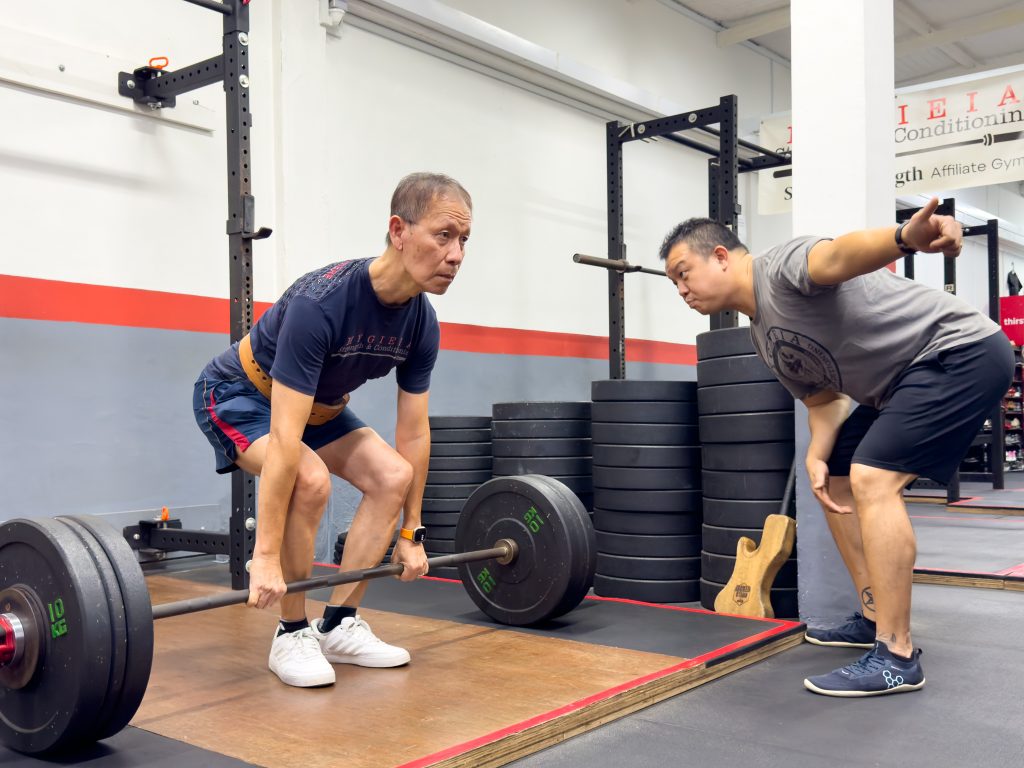
In the last couple of months, I’ve had at least three conversations with different clients after they received the results of their health screening tests, regarding their kidney function. It then occurred to me that I’ve had this conversation many times over the years and thought it’d be a good idea to address this in an article.
As most of our clients are slightly older, it’s pretty common that they go for regular health screening tests, which include bloodwork. The conversation I was referring to earlier is regarding their kidneys – specifically that their creatinine and eGFR numbers are outside of the reference range with the creatinine figure being above and eGFR figure being below what is “normal”.
Before I continue, a quick disclaimer that I’m obviously not a doctor and this article is for informational purposes only and should not be taken as medical advice. If you have any concerns regarding your health screening test results, you should always check with your doctor, preferably one who is familiar with the effects that training, having more muscle mass and creatine consumption has on your creatinine and eGFR numbers.
Functions of your kidneys
The kidneys are two bean-shaped organs sitting on either side of your lower back, each about the size of a clenched fist. Somewhere between 110 and 140 litres of blood passes through them every single day, where millions of tiny filtering units called nephrons let excess fluid and waste products out while holding back blood cells and larger molecules such as proteins, returning the filtered blood to the bloodstream with the right balance of water and minerals and sending the waste onward to the bladder as urine (HealthHub, 2021). Beyond that filtering job, they maintain stable levels of electrolytes such as sodium, potassium and phosphate, and produce hormones that help regulate blood pressure, maintain bone health, and prevent anaemia (HealthHub, 2021).
Glomerular Filtration Rate and creatinine
The standard measure of kidney function is the rate at which your kidneys filter your blood, known as the Glomerular Filtration Rate (GFR), and it is generally accepted as the best overall index of how well the kidneys are working. The issue is that measuring true GFR is cumbersome and difficult to do accurately, so serum creatinine based estimating equations are used instead to produce an estimated GFR (eGFR), and both of the common equations, Modification of Diet in Renal Disease (MDRD) and Chronic Kidney Disease Epidemiology Collaboration (CKD-EPI), work from your serum creatinine, age, and gender, adjusted for body surface area (Agency for Care Effectiveness [ACE], 2022).
Creatinine is the breakdown product of the body’s creatine pool, which includes both free creatine and creatine phosphate. Roughly 95% of the body’s total creatine pool sits in skeletal muscle, where it converts into creatinine spontaneously at a constant rate before diffusing into the bloodstream to be filtered out (Feigenbaum et al., 2017). Because production is proportional to how much muscle you’re carrying, creatinine works as a surrogate marker for muscle mass as well as a marker of filtration (Thongprayoon et al., 2016), which means that if the input is inflated for reasons unrelated to your kidneys, the eGFR calculated from it will be inaccurate.
Evaluating kidney damage
In Singapore, the national clinical guidance comes from the Agency for Care Effectiveness, which sits under the Ministry of Health, and it categorises GFR as follows (ACE, 2022):
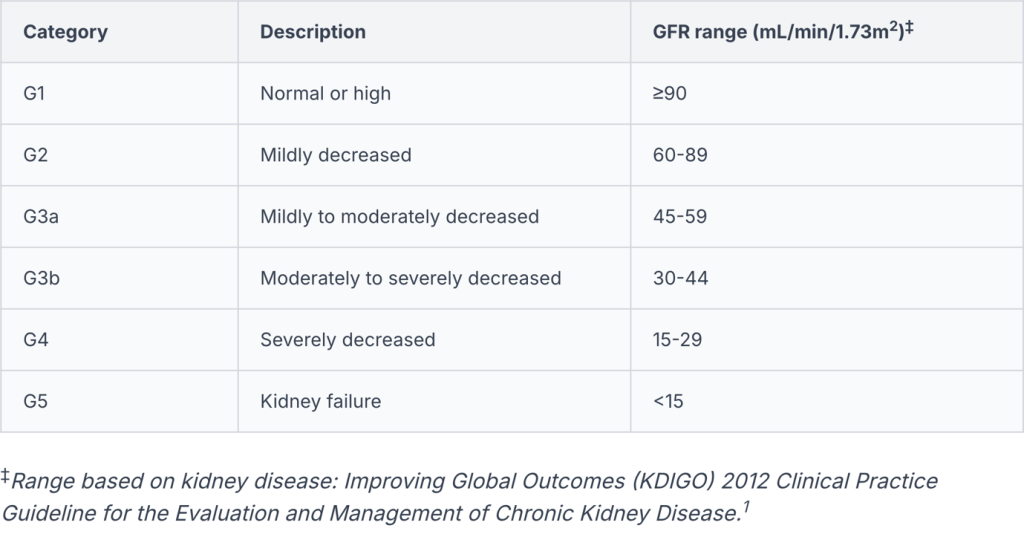
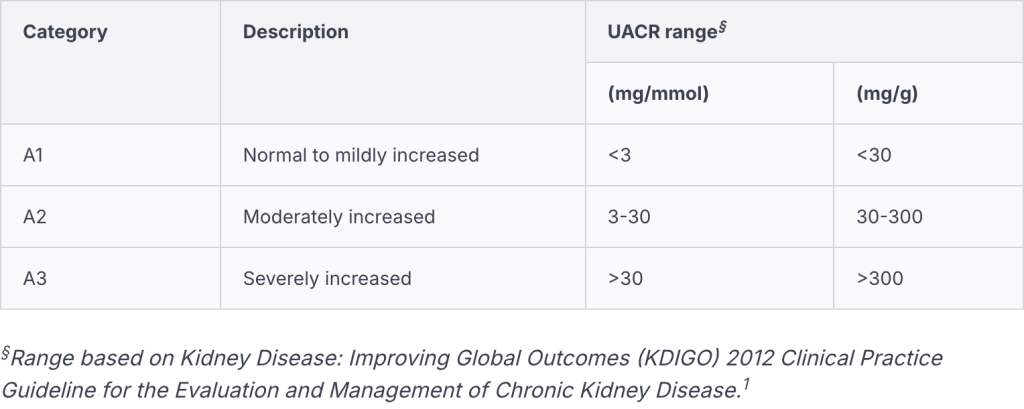
Chronic kidney disease (CKD) is diagnosed when GFR is less than 60 mL/min/1.73m², or Urine Albumin Creatinine Ratio (UACR) is at or above 3 mg/mmol, or any other marker of kidney damage that is present, and any of those has persisted for at least three months (ACE, 2022). A single screening result should not be taken as a diagnosis, and the guidance recommends that the test should be repeated three months later before CKD is diagnosed.
Serum creatinine doesn’t have a nationally agreed normal range for it in the way there is for GFR, and the reference range shown on your report is generated by your own laboratory’s assay and population. A typical range you’d see on a laboratory report in Singapore is roughly 50 to 105 µmol/L for males and roughly 37 to 90 µmol/L for females.
Why your doctor gets concerned
If filtration drops while your muscle mass and diet stay constant, creatinine stops being cleared efficiently and accumulates in the blood, which shows up as an elevated value and a correspondingly reduced eGFR. Acute kidney injury is defined by either a rise in serum creatinine of at least 26.5 µmol/L, within 48 hours, or a rise to at least 1.5 times baseline within the previous seven days or having urine volume lower than 0.5 mL/kg/h for 6 hours (ACE, 2022).
Singapore has a high rate of kidney failure with roughly 4.7 people diagnosed every day, which means there’s one new patient every five hours, and two in three of those cases are caused by poorly controlled diabetes (HealthHub, 2021). The other risk factors for CKD include cardiovascular disease, hypertension, obesity, smoking and excessive intake of painkillers (ACE, 2022; HealthHub, 2021). Your doctor is doing exactly the right thing by being concerned and bringing this to your attention.
It’s worth taking note that creatinine itself is harmless and is not toxic even when it accumulates, and its readings are treated as a signal rather than as a problem (Baraki, 2020).
Why lifter’s numbers might be outside the reference range
Creatinine is only a clean signal when a person is in a genuine steady state, and individuals who lift regularly and consume creatine, like you, are not. And because more muscle mass and consuming a diet high in protein means more creatinine produced, which in turn means a higher concentration in the blood with no change in true filtration, the laboratory flags a value like 120 or 130 µmol/L as out of range and raises an alarm (Baraki, 2020).
The national guidance lists factors that are typical of a lifter such as high muscle mass and a high-protein diet among the factors that increase serum creatinine, and therefore decrease eGFR, without necessarily affecting kidney function (ACE, 2022). At the same time, hard training within the last 24 hours is among the factors that could increase albuminuria, and therefore increase UACR (ACE, 2022).
Consumption of creatine
Seeing that your creatinine, eGFR or UACR numbers are outside of the reference range, your doctor may have advised you to stop taking creatine on the grounds that it might be damaging your kidneys. That may appear to be sound advice on the surface level, but take a deeper look, and that might not be the case.
Feigenbaum et al. (2017) gave 25 healthy subjects a single 10 gram dose of creatine monohydrate and tracked serum creatinine across the following 24 hours, finding a baseline of 85.77 µmol/L that peaked at 220.17 µmol/L two hours after ingestion before returning to 85.77 µmol/L by the 24 hour mark, while creatine ethyl ester peaked at 593.3 µmol/L. For most of the way to and from the peak, the reading levels mimic acute kidney injury on paper, in perfectly healthy subjects, entirely as a result of creatine supplementation.
Velema and de Ronde (2011) and Williamson and New (2014) published two cases describing exactly this pattern of markedly raised creatinine with no underlying kidney pathology and full reversal within about a week of stopping creatine supplementation. When Poortmans and Francaux (1999) compared people who had used oral creatine for between ten months and five years against controls, they found no differences in plasma concentrations or urinary excretion of creatinine, urea, or albumin. Creatine moves the marker and there is no good evidence that it causes the damage (Baraki, 2020).
How to know if it’s your training or supplementation or something serious?
The point of writing this article is not to convince you that the results outside of the reference range isn’t cause for concern, but to give you data to work through it with your doctor rather than around them.
Compare past results
Find your old results and compare them. Creatinine levels that has been sitting at 115 µmol/L for five years is genuinely reassuring, whereas a jump from 70 to 125 µmol/L warrants proper investigation even if you put on muscle in between (Baraki, 2020). The trajectory tells you far more than a single reading taken in isolation.
Note the cutoff number
Since most people, including those who train seriously, will not exceed roughly 133 µmol/L without genuine impairment, anything above that should only be attributed to muscularity once other causes have been ruled out (Baraki, 2020).
Retest under clean conditions
Pause supplementation and hard training for several days, turning up properly hydrated, and abstain from a high protein diet (especially animal protein) for 12 hours before the blood draw (ACE, 2022), so that whatever the number the results show, it’ll be a more accurate representation of your kidney’s functions.
Cystatin C and urinalysis
Cystatin C is a filtration marker unaffected by muscle mass and should read normal if muscularity is the cause of the abnormal results (Baraki, 2020). Additionally, a complete urinalysis looking for haematuria, pyuria, or casts can point towards establishing a cause for the abnormal results (ACE, 2022).
Pharmaceuticals and lifestyle
Frequent or chronic Nonsteroidal Anti-Inflammatory Drugs (NSAID) and excessive painkiller use (ACE, 2022), as well as smoking, obesity, blood pressure and diabetes, are controllable risk factors to reduce the risk of CKD (HealthHub, 2021).
The next time you get your blood test results and the doctor brings to your attention that your creatinine or eGFR numbers are outside of the reference range, you are now aware that it could be a function of your training and/or consumption of creatine and the mechanisms behind it, and not that your renal functions are compromised. To have a peace of mind, have a conversation with your doctor to do further investigation to confirm that your kidneys are working just fine.
References:
1. Agency for Care Effectiveness. (2022). *Chronic kidney disease: Early detection*. ACE Clinical Guidance (ACG), Ministry of Health, Singapore. https://www.ace-hta.gov.sg/healthcare-professionals/acg/chronic-kidney-disease-early-detection/
2. Baraki, A. (2020, July 31). *Abnormal labs in exercise part I: Kidney function*. Barbell Medicine. (Updated March 24, 2026). https://www.barbellmedicine.com/blog/abnormal-labs-in-exercise-part-i-kidney-function/
3. Feigenbaum, J., Hoffman, R., & Hunt, K. (2017, April 5). *Dietary creatine supplements raise serum creatinine mimicking acute kidney injury*. Starting Strength. https://startingstrength.com/article/dietary-creatine-supplements-raise-serum-creatinine-mimicking-acute-kidney-injury
4. HealthHub. (2021, May 31). *Kidney health*. Ministry of Health, Singapore. https://www.healthhub.sg/health-conditions/kidney-health-kidney-care
5. Poortmans, J. R., & Francaux, M. (1999). Long-term oral creatine supplementation does not impair renal function in healthy athletes. *Medicine & Science in Sports & Exercise, 31*(8), 1108–1110. https://doi.org/10.1097/00005768-199908000-00005
6. Thongprayoon, C., Cheungpasitporn, W., & Kashani, K. (2016). Serum creatinine level, a surrogate of muscle mass, predicts mortality in critically ill patients. *Journal of Thoracic Disease, 8*(5), E305–E311. https://doi.org/10.21037/jtd.2016.03.62
7. Velema, M. S., & de Ronde, W. (2011). Elevated plasma creatinine due to creatine ethyl ester use. The Netherlands Journal of Medicine, 69(2), 79–81.
8. Williamson, L., & New, D. (2014). How the use of creatine supplements can elevate serum creatinine in the absence of underlying kidney pathology. BMJ Case Reports, 2014, bcr2014204754. https://doi.org/10.1136/bcr-2014-204754