

If you are (or have been) on a diet, you’re probably familiar with the idea of tracking your calories.
I have done it before, and I hate it. It’s super complicated!
What makes it worse is that “just” tracking your calories is not enough. You also need to think about your macronutrients: protein, carbohydrates, and fats. Then there is fiber too—but let’s not overcomplicate this.
Recommended ranges exist for each. For adults, the Acceptable Macronutrient Distribution Range gives us the following ranges:
1. 45–65% of your calories from carbohydrates,
2. 20–35% from fats, and
3. 10–35% from protein
That’s already quite a lot to think about. Now you need to organise everything so it fits together like a puzzle!
So, if you want to be practical, one way to simplify dieting is to make sure you get enough of the important things first, like protein (and fiber), then adjust the rest of your food portions based on how many calories you need.
The idea isn’t that carbohydrates and fats suddenly don’t matter.
They do.
The idea is to prioritize what you need to get enough of first, then fill in the rest.
It is imperfect, but generally, it works!
What If We Treat Physical Activity the Same Way?
Yes, I think we can approach our physical activity in a similar way.
For the purpose of this analogy, let’s replace calories with time.
Protein is strength training.
Carbohydrates are cardio.
And fats are the other physical activities you enjoy doing—sports, BJJ, cycling, football, and whatever else you fancy.
Obviously, this is not a perfect one-to-one comparison, but bear with me.
If time is our calorie budget, the question becomes: how should we spend it?
Before deciding that ourselves, perhaps there is already a recommended “diet” for physical activity that we can look at. Turns out, there is!
What Are We Supposed to Be Getting?
The Singapore Physical Activity Guidelines (HealthHub, n.d.) recommend that adults accumulate 150–300 minutes of moderate-intensity aerobic activity per week, while also doing muscle-strengthening activities on at least two days each week. The American Physical Activity Guidelines give essentially the same recommendation.
The separation between aerobic activity and strength gives us an important hint: physical activity isn’t treated as one homogeneous thing.
The recommendation isn’t simply: “Exercise for 150 minutes.”
We have different “macros” to fulfill: aerobic activity and muscle-strengthening activity.
So far, our silly food analogy isn’t doing too badly, huh?
Now, if we use one hour as a practical estimate for a strength-training session, two sessions would require roughly 2 hours per week.
This is not an official recommendation—the guideline only specifies at least two days of muscle-strengthening activity. But from our perspective, if you are following a simple and effective strength program like Starting Strength, allocating about an hour per session is reasonable.
Add that to the recommended 150–300 minutes of aerobic activity, and you are looking at roughly 4.5–7 hours of physical activity per week.
But this is where things get interesting!
Are the Busy Singaporeans Actually Missing All of This Activity?
According to Singapore’s 2024 National Population Health Survey (Ministry of Health & Health Promotion Board, 2025), 84.7% of Singapore residents aged 18–74 already achieved sufficient total physical activity. “Sufficient” here means at least either 150 minutes of moderate-intensity activity, 75 minutes of vigorous activity, or an equivalent combination each week.
That surprised me a little given how busy most people are! If almost 85% of Singaporeans are already sufficiently physically active, where is all this activity coming from?
Mostly, not from exercise!
In 2024, the total physical activity accumulated by Singapore residents came from (Ministry of Health & Health Promotion Board, 2025):
1. 51.6% commuting
2. 23.6% work-related activity
3. 24.7% leisure-time physical activity
In other words, about 75% of our physical activity comes from commuting and work.
Walking to the MRT counts.
Walking from the MRT to your office counts.
Cycling somewhere counts.
A physically active job can count too.
The guidelines specifically recognize that you can accumulate physical activity through work, transportation, and leisure, rather than requiring all 150 minutes to come from deliberate exercise sessions.
This changes the way I think about our “training calorie budget.”
You might not actually need to spend another 2.5 hours every week specifically doing cardio to satisfy the aerobic physical activity recommendation.
Depending on your lifestyle, you may already be “eating” quite a lot of carbs.
So, Which Macro Are We Missing?
This is where the numbers become much more interesting.
While 84.7% of Singapore residents achieved sufficient total physical activity, only 35.7% reported doing sufficient muscle-strengthening activity (Ministry of Health & Health Promotion Board, 2025).
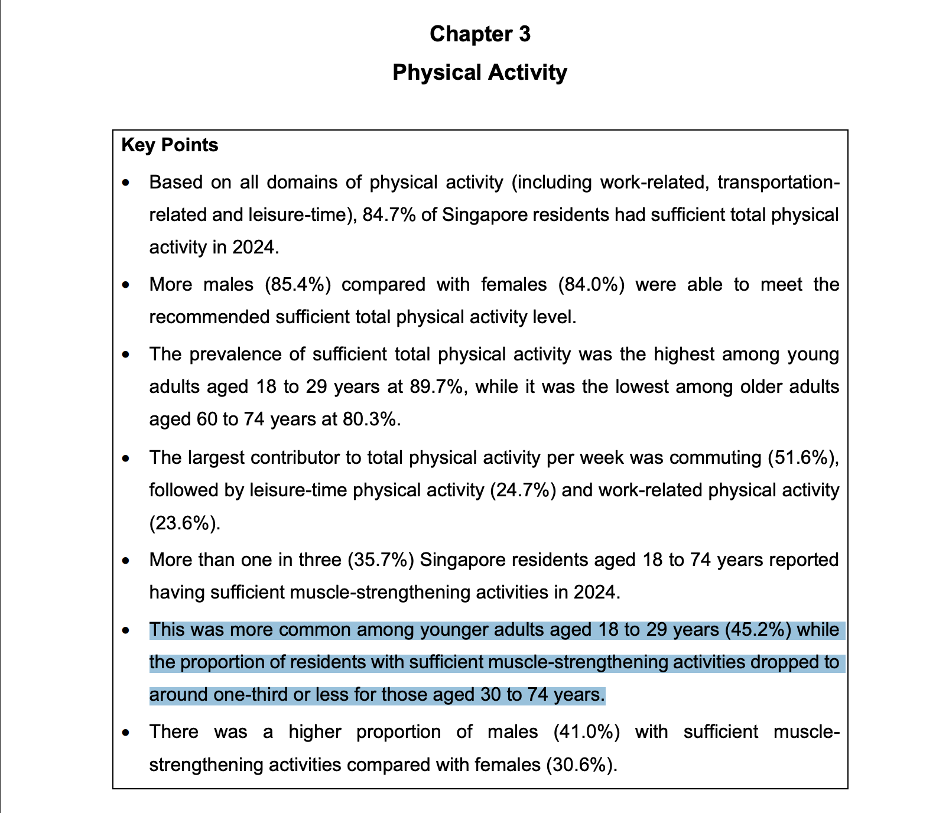
Figure 1 Screenshot from NPHS 2024 Report.
That 35.7% actually looks slightly better than the reality for most adults.
Among those aged 18–29, 45.2% reported sufficient muscle-strengthening activity. From age 30 onwards, however, the figure drops to around one-third or less (Ministry of Health & Health Promotion Board, 2025).
However, let’s use the initial figure and flip those numbers around:
Only 15.3% of Singapore residents fell short of the total physical activity recommendation.
But 64.3% fell short of the muscle-strengthening recommendation.
That is a very different picture.
Now, we have to be careful here. These aren’t necessarily the exact same people. We cannot say that every person who meets the general physical activity guideline already has their cardio completely covered and only needs to start lifting weights.
But at the population level, the contrast is difficult to ignore.
Singaporeans seem to be pretty good at accumulating physical activity.
We walk, commute, work, play sports.
We accumulate movement throughout the week.
What we are much less likely to do is deliberately train our muscles to become stronger.
Or, to bring this unnecessarily long nutrition analogy back:
As a population, we seem to be getting plenty of “calories,” and quite a lot of “carbohydrates,” but many of us still aren’t getting enough “protein.”
Maybe We Don’t Need to Do Everything
And I think this matters when deciding how to spend the limited time we actually have for exercise.
If you already walk to and from the MRT every day, move around at work, play football on the weekend, or otherwise get plenty of physical activity, you may not need to make every gym session cardio.
Look at what you are already getting, then identify what is missing.
For many people in Singapore, the data suggests that the missing macro is strength.
That doesn’t mean cardio isn’t important, nor does it mean spending 100% of your time on strength training is better. Just like eating nothing but protein would make for a pretty questionable diet.
The idea isn’t that “carbohydrates” and “fats” suddenly don’t matter.
They do.
The idea is to prioritise what you need to get enough of first, then fill in the rest.
It is imperfect, but generally, it works!
Reference:
1. HealthHub. (n.d.). Singapore Physical Activity Guidelines. https://www.healthhub.sg/programmes/letsmoveit/singapore-physical-activity-guidelines
2. Ministry of Health, & Health Promotion Board. (2025). National Population Health Survey 2024: Household interview and health examination. https://isomer-user-content.by.gov.sg/3/4cad4e62-8093-48de-b0d1-af8e012d4d95/NPHS%202024%20Survey%20Report_Final.pdf