
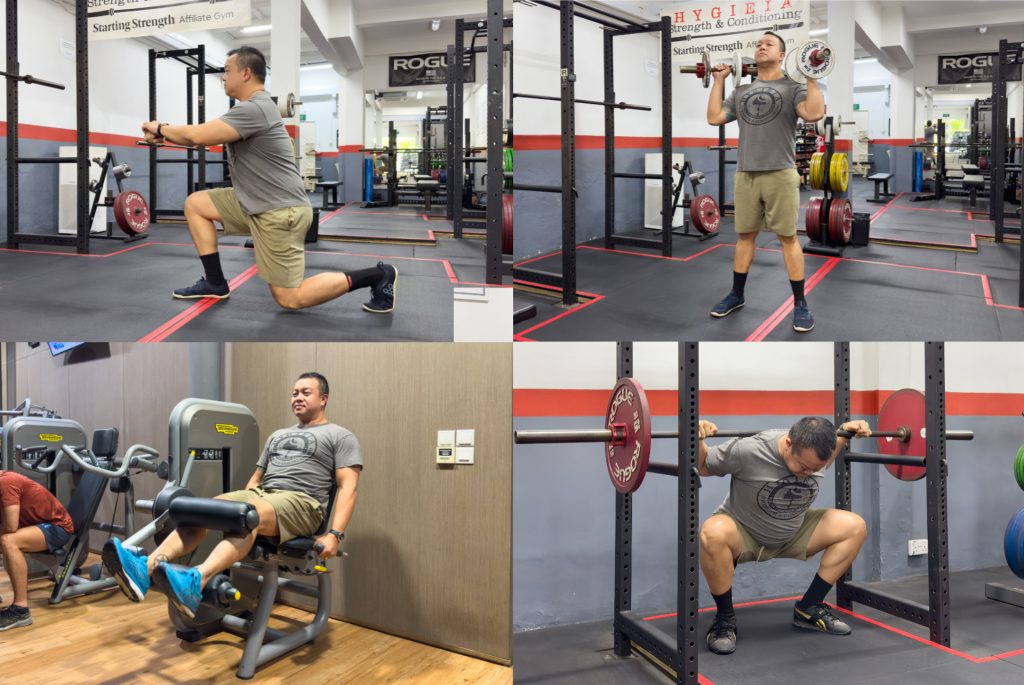
While editing our October podcast episode about reviewing beginner barbell programs earlier this month, I came across a portion where I was talking about why we choose the barbell over every other tool to get stronger. Since there has been an increase in interest in barbell strength training, we thought it’d be a good idea to go online, find beginner strength training programs, and review them, so that listeners would know how to judge whether a program is effective.
At the start, I mentioned that we’d be reviewing barbell based programs because we’re of the opinion that it’s the best tool to get stronger, and that the why was outside the purview of the episode. I then said we should have something in our content library that we can link to, which explains the why. When I went searching through our content, it was only then that I realised we didn’t have one. All I could find was a couple of paragraphs within an article. So here’s an article that analyses and explains why barbells are the superior tool for building strength.
Yes, it might appear self serving for someone who specialises in coaching barbell strength training to write an article extolling the benefits and singing the praises of the barbell, but I implore you to put aside your scepticism and join me in analysing why we think the barbell is the best tool for building strength.
Before we start, we need to first define what strength training is, because that definition will be used in our analysis of the strength training tools that we’ll be discussing later on in the article. When someone wants to engage in strength training, it means they want to get stronger, for whatever purpose they might be after. It could be someone who wants to rebuild the strength and muscle they’ve been losing over the past few decades, so that they can be physically independent in their senior years and keep doing the things they love. It could be someone with osteopenia or osteoporosis who wants to improve their bone density to make them more resilient against fractures. Or it could be someone who wants to improve their golf or cycling performance.
Strength training is made up of two words: strength and training. We define strength as the ability to produce force against an external resistance. The more force you can produce, the stronger you are. The goal of strength training is to increase the amount of force you are able to produce, and to do that, you need to increase the resistance, which is the load, that you’re training with over time.
The second word is training. Training is exercise done with the long term aim of achieving a goal at the end of it. The goal may or may not be a single point in time. For most people, it’s usually something you strive towards for your entire training career. For example, you may be training to increase your bone density. When you train, instead of simply just exercising, every single workout is specifically programmed to produce a training stress that elicits an adaptation towards that goal.
Put the two words together, and strength training is a series of workouts programmed in a manner that elicits the adaptation of increasing your ability to produce force. With that out of the way, let’s discuss the different modalities of strength training and their pros and cons.
Now, anything can be strength training. The main consideration is where your starting point is. If you’ve been bedridden for 3 months, walking and climbing up stairs can be considered strength training. The issue is that you’ll adapt to that pretty quickly, and it stops being a training stimulus.
The important question is which tool keeps working over the long term, so here are the questions I’ll ask of each modality:
Is it scalable and can you increase the load in small, gradual steps?
Can you continue to make progress over many years?
Do the exercises load the whole body?
Then there are the practical questions:
How hard is it to learn and use safely?
What does it cost in terms of accessibility?
The first three decide the tool’s efficacy as a training modality. The last two decide how easy it is to get started. The first three are weighted more heavily because we’re discussing effective strength training tools, but I acknowledge that the practical considerations are a factor when someone is thinking about starting training.
There are probably hundreds of different pieces of exercise equipment that claim to build strength that have been invented and marketed over the years, and some of them are utterly ridiculous. Case in point: the Shake Weight. If you’re trying to get stronger, there’s no better way to waste your time and look ridiculous at the same time.
For the sake of simplicity, let’s limit our comparison to the popular modalities that most people gravitate towards when starting out with strength training, which are bodyweight exercises, dumbbells, machines, and barbells.
Bodyweight Exercises
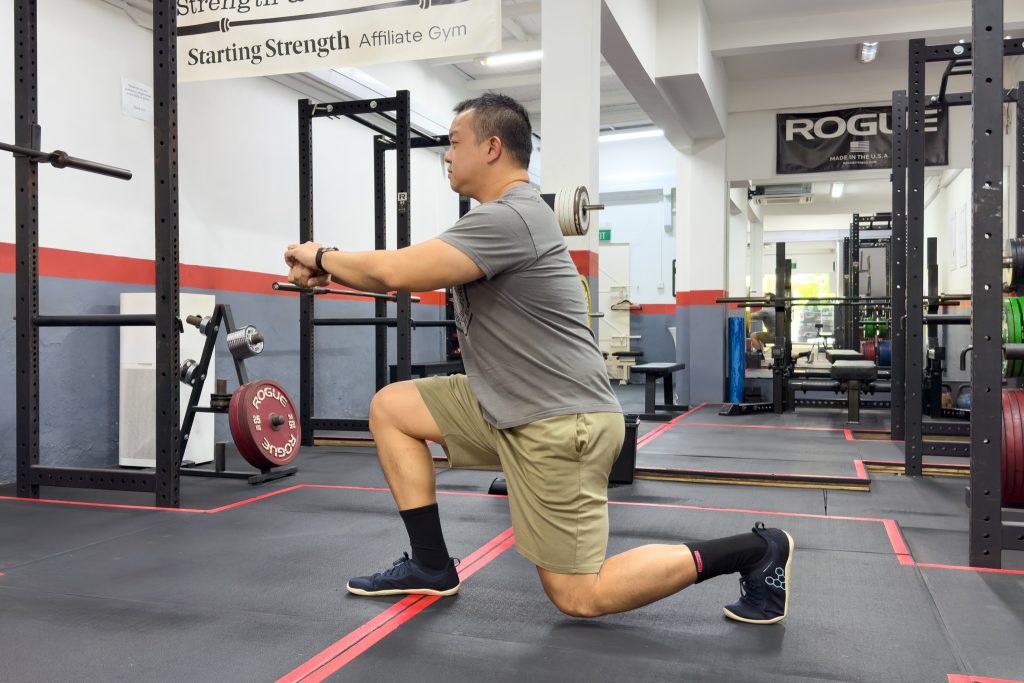
Pros of bodyweight exercises
First on the list, with the lowest barrier to entry, are bodyweight exercises. You’ve got your body with you all the time. You don’t need to buy any equipment, you don’t need to go to a gym. It’s very accessible. There’s close to zero cost, and you can do it pretty much anywhere, which makes it very convenient, saving you travelling time to get to a place to do it. The low barrier to learning also makes it easy to start. And if needed, we’re very lucky in Singapore to have thousands of free fitness corners around estates and parks that one can utilise to do exercises like chin ups and dips.
Cons of bodyweight exercises
The main issue with bodyweight exercises is that, over the long term, they run out of the ability to impose a training stress that elicits a strength adaptation.
For upper body training, depending on your level of fitness, it can be hard to scale and very gradually progress exercises like the push up, chin up, and dip. Easy when you’re in your 20s and 30s, but a little trickier when you’re in your 70s or 80s.
There’s also poor lower body loading, because the load is fixed to your bodyweight. Once squats become easy, you can progress to single leg squats, but what happens when you can do a bunch of those easily? How do you progress? You can do more reps, do them slower, or add a pause at the bottom. It’s the same issue with the upper body exercises. All of these make the exercise harder, but none of them increase the amount of force needed to do the reps, which means they don’t make you stronger. No external load also means your bones aren’t getting denser, because there’s no compressive loading to signal to the bones to get denser.
So while they’re a great place to start, they won’t carry you far as a long term strength training tool.
Dumbbells
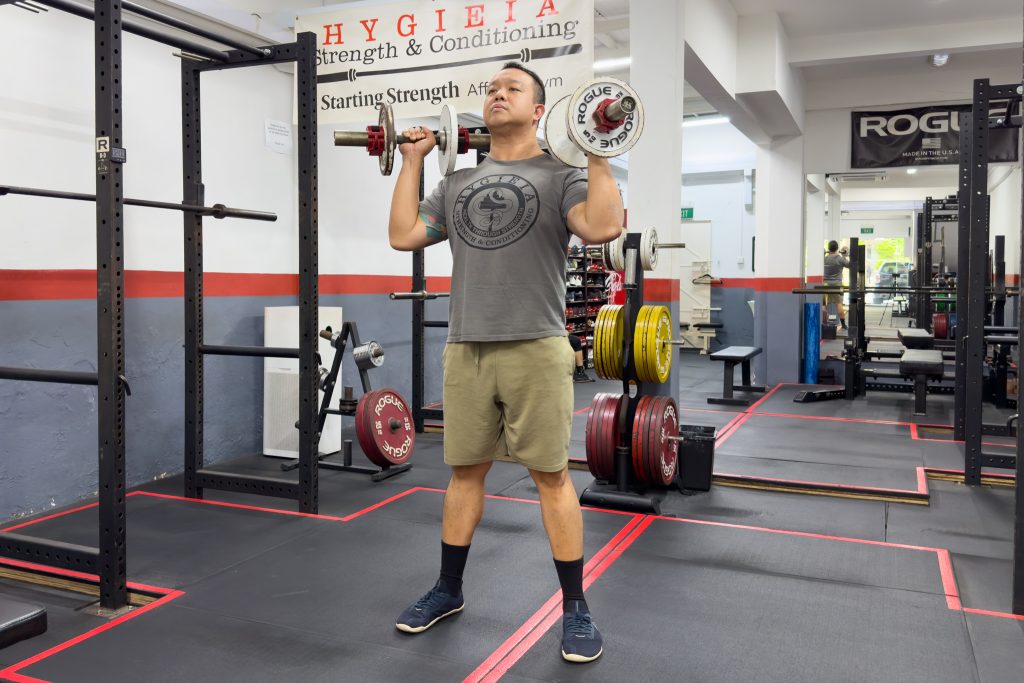
Pros of dumbbells
Let’s move on to the next exercise modality – dumbbells. If you don’t want to join a gym to use dumbbells, a quick search on online marketplaces for used adjustable dumbbell sets yields a bunch of options for not a lot of money. Get a set, and you’re ready to roll. With microplates available to increase the weight incrementally, scaling to the person’s ability and progressing gradually is doable. Dumbbells don’t take up much space, so storage in your home is pretty easy. Unlike bodyweight exercises, you can do a huge variety of exercises with dumbbells, compound or isolation, and you can load every exercise, movement pattern, or muscle group.
Some lifters also like that each dumbbell is lifted by an independent limb, which works on its own and has a freer movement path. They find that this helps expose and correct lateral imbalances and works on each limb’s strength and stabilisation. Personally, I don’t find it beneficial for most lifters, except in very specific circumstances.
When you miss a rep on a dumbbell squat or bench, it’s safer with dumbbells and you don’t need a spotter or equipment like safety arms. You can just drop the dumbbells to the side, and you’re out.
When it comes to using free weights to strength train, dumbbells appear less intimidating than barbells to some people, so it might be easier to convince mum and dad to train with dumbbells rather than barbells.
Cons of dumbbells
As you get stronger and need heavier weights to keep getting stronger, a few issues come up. Since you have to hold onto the dumbbells when doing the exercises, you are limited by how much weight you can hold in your hands. You’re able to squat way in excess of what you can hold in your hands, so the bottleneck to your squat or deadlift going up is not that you can’t lift heavier but that you’re physically not able to hold onto heavier weights. If you can’t continually increase the load over the long term, you run into the same issue as bodyweight exercises, which is that you can’t progressively get stronger over the long term.
Why not just use straps, you say? Yes, straps do take away the issue of grip. Let’s say you use straps and load the dumbbell to as heavy as you can squat or deadlift. This brings us to the next issue. As the weight of the dumbbell increases, its size increases as well. With the increased size comes the problem of ergonomics, which will force you to change the movement slightly to accommodate the large dumbbell. If you’ve ever tried to squat or deadlift while holding onto a pair of heavy dumbbells, you’ll very quickly realise that it’s not practical.
A heavy dumbbell also makes it hard to get into the start position for the lifts, especially the press or the bench. Now, the limiting factor isn’t being able to do the lift itself, but getting set up. There are dumbbell spotter hooks that circumvent this issue by letting you hang your dumbbells from a barbell or rack, which makes it easier to set up for your press and bench, but that means you’ll need to get more equipment or head to a gym.
So while dumbbells can work for longer than bodyweight exercises as a strength training tool, they’re not conducive to long term strength gains.
Machines
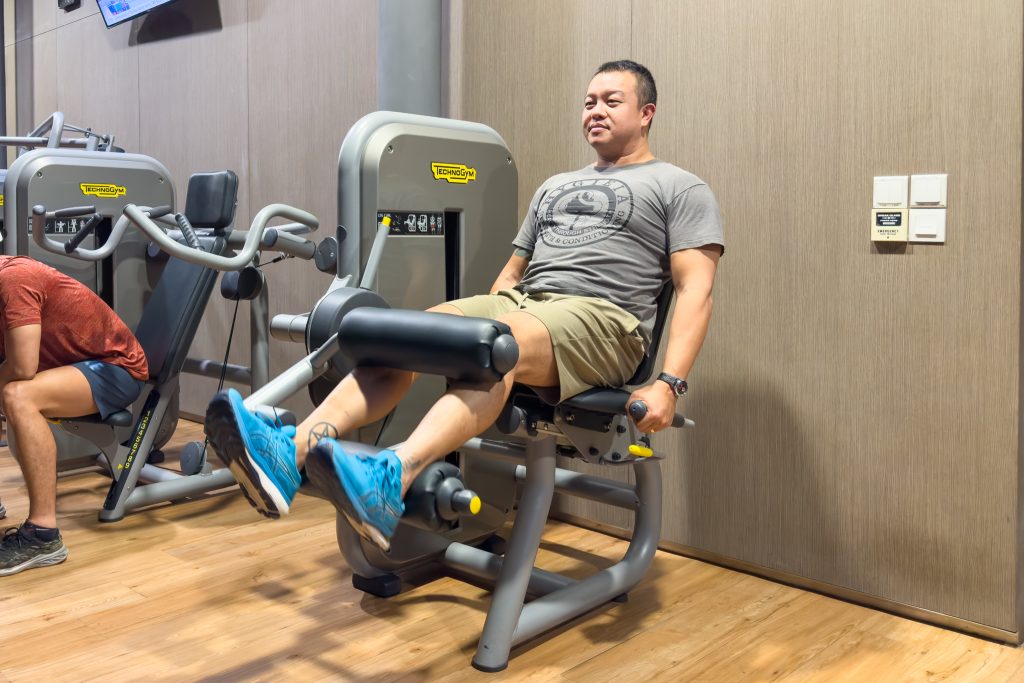
Pros of machines
Next on the list – machines. While machines have a high barrier to entry from a cost perspective, they have a low barrier to learn and use. You can pretty much start using them without any technique coaching, since they’re low in technical demand, and you can push hard from the get go because the movement path is set for you by the manufacturer. People with balance concerns can train without the fear of losing their balance, since machines put the lifter in a stable body position. If you so wish, you can train to failure without a spotter or safety arms, with little to no risk of being pinned under the weight.
There’s a machine to train every major muscle group in the body, so you can isolate and train the specific muscle that you want to focus on. Setting up is easy, and changing weights is fast, since it’s usually done with either a pin or a lever. Put the pin at the weight that you want, make some small adjustments to better suit your anthropometry, and you’re off. There are also microplates available for weight stack machines, so you can do small and gradual weight increments.
Cons of machines
Since the machine’s geometry is decided by the manufacturer, it’s not going to move in a way that exactly fits your anthropometry, even though it has some adjustability. This means you need to adjust to the way the machine moves, instead of moving the weight in a way that suits your anthropometry.
Machines generally tend to isolate and work specific muscles with single joint exercises, so they don’t stress and train the whole system in the way that barbell squats and deadlifts can. This limits the amount of progress you can make on these machines and as a function of that, your strength improvements. Even though there might still be more weight on the weight stack that would let you go heavier, it lacks the stimulus for continued progress over the long term. And for people who are pretty strong, if they run out of weight on the weight stack, they can’t load more to go heavier.
Since most of these machines are used seated, they’re also not useful for combating osteoporosis, as it doesn’t load the bones of the axial skeleton, which is needed for them to become denser. There’s also less carryover to everyday or real world strength, because the machine takes away the coordination and stabilisation that free weight exercises train.
While machines can make it easier for people with balance concerns to start training, it doesn’t make their balance better. When you train with free weights and do exercises that require you to be on your feet, your balance is being trained, as you have to constantly adjust to keep your centre of mass over your base of support while doing the exercise. To most of us, it doesn’t feel like we’re training our balance, but for a very detrained person, it is.
Unless you have a lot of space and funds, it’s not practical to set machines up at home. To train the whole body, you’ll need a whole range of machines, each of which is expensive, large, and can only do one thing. So you’d likely need to join a gym.
Finally, you don’t really know how much you’re lifting. While the weight stack may show that you’re lifting “100kg”, you can’t be sure what it actually is, with all the cams and pulleys the cable goes through before it gets to the handle you’re pushing or pulling on. And different manufacturers do things differently, so if you’re travelling and using different machines, how do you know how much weight you’re using and whether you’re making progress?
So while machines are an easy way to start, their limitations make them a poor long term tool for building strength.
Barbells
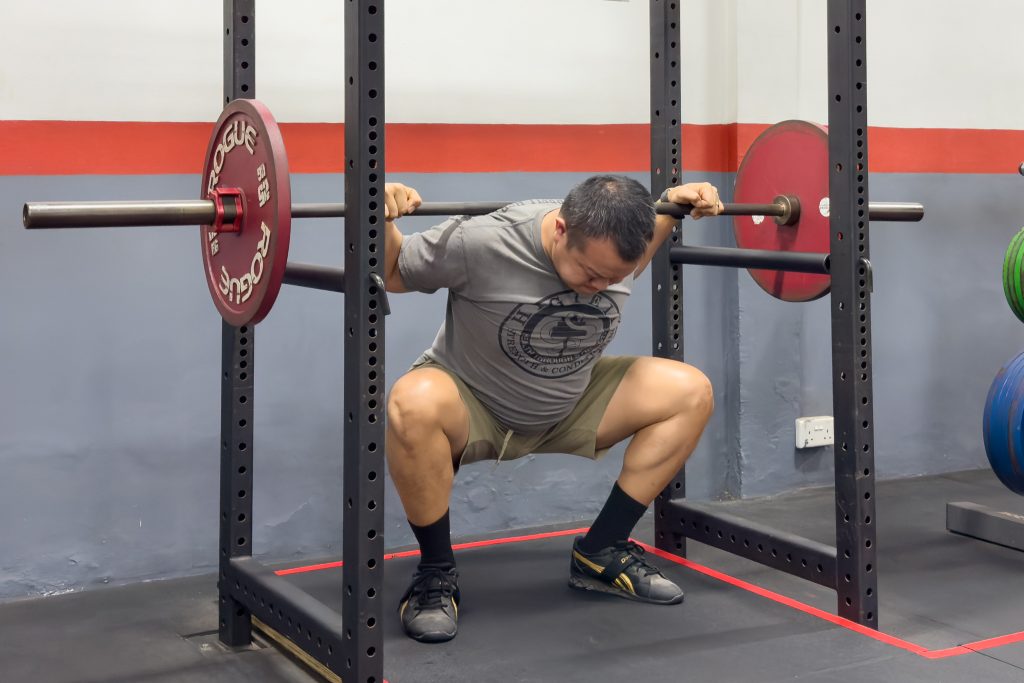
Pros of barbells
Okay, we finally get to the barbell. The barbell allows the lifter to load and strengthen the entire body on exercises like the squat and deadlift with an “infinite” amount of loading. You can load the barbell with more weight than any human being can currently lift. At the opposite end of the spectrum, we have 5kg barbells in our gym. You can get any weight between 5kg and 511kg in 0.5kg increments, so it’s scalable, and anyone can progress very minutely.
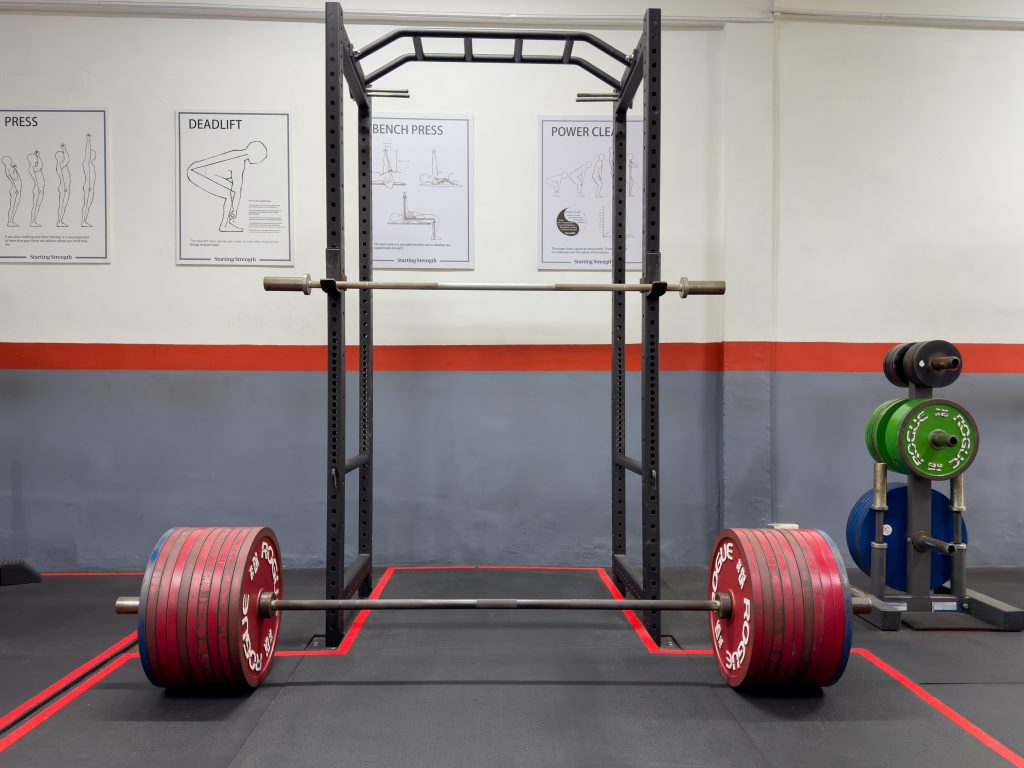
From 5kg to 511kg
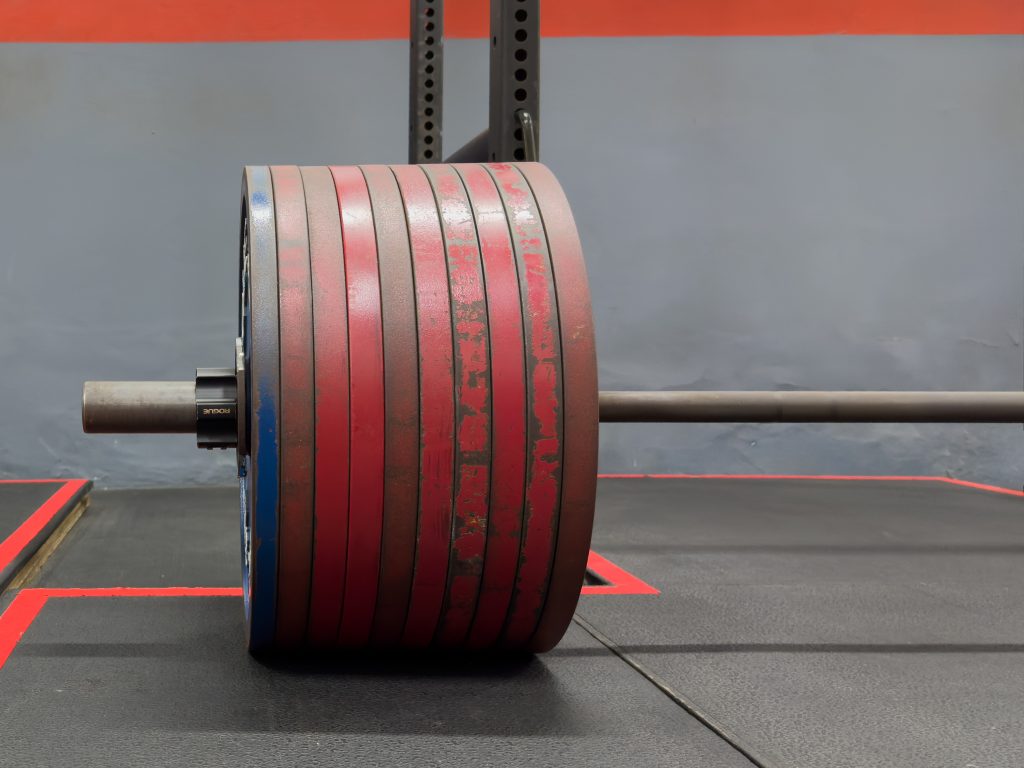
The bar loaded to 511kg, the world-record deadlift, with room still to spare on the sleeve.
The barbell also allows you to load normal human movement patterns, and since the load is added onto the sleeves at the ends of the bar, the movement pattern doesn’t change, nor do the ergonomics of how you interact with the barbell, whether the weight on the bar is 2.5kg, 25kg, or 250kg. And because you can perform lifts that load the entire body, like the squat, which strengthens everything between where the bar sits and the floor, everything gets stronger at the same time. This is efficient, because a small number of compound lifts will strengthen everything in the body. It’s the perfect prescription for lifters with osteopenia or osteoporosis who want to improve their bone density, because squats and deadlifts load the axial spine and allow you to gradually increase the weight “infinitely” over time.
The last point can be seen as both a pro and a con. Depending on your finances and space at home, you can set up a home gym. All you need is a barbell, plates, a rack, a bench, collars and you’re set for life, as they’ll pretty much last a lifetime. Buy once, cry once. It’s more equipment and more expensive than a set of adjustable dumbbells, but it’s much cheaper and takes up less space than a whole bunch of machines. For what you’re getting and its versatility, I’d say the value that you’ll get out of it is worth it. Alternatively, you’ll need to join a gym with the appropriate equipment, which is getting easier, given the recent popularity of barbell strength training. Here’s how to choose a gym for barbell strength training.
Cons of barbells
Yes, even what we think is the best tool for strength training has its downsides. One of the biggest downsides is that it has a much steeper learning curve. It’s tough to learn as a beginner, and I know how hard it was when I first started out. I didn’t know what I was doing, got stuck and made no progress, and some things started to hurt and ache. It took a lot of time and effort researching and finding out by trial and error how to do the lifts, what works and what doesn’t. It’s not that you can’t do this on your own. You can, but even with all the content out there teaching you how to do it, you’ll still need to invest a bunch of time and effort. Once again, it might appear self serving, but coaching comes in very handy when learning how to do the barbell lifts efficiently and safely.
If you miss a heavy set, yes, it can be dangerous but it can very easily be mitigated by setting up your safety arms correctly. We have videos explaining how to set up your safety arms for the two basic barbell lifts that absolutely require them when the weights get heavy – the squat and bench press.
Barbells might also appear intimidating, which can put off people new to the gym, or seniors. They may not know what to do with a barbell and a rack, and they might worry that they’d hurt themselves trying.
Anything is good when you’re starting out
At the end of the day, if you’re starting out with strength training, good on you! I’m not poo pooing any of the modalities I wrote about earlier in this article. If you’re going from being sedentary to exercising, doing any of the above is a win. Everything mentioned above is but a tool, left to you to utilise to achieve your goals. While I’m of the opinion that an effective strength training program needs to be barbell based, with the majority of the training done with the barbell, the other modalities can still provide value to the lifter.
For example, chin ups are a good accessory exercise and are regularly part of my programming. If one does not have the requisite strength to do chin ups or a bodyweight squat, that’s where the lat pulldown and leg press come in handy. Dumbbells can provide a sturdy support to lean your phone against to video your lifts. Jokes aside, dumbbells came in handy when I had a pinched nerve last year. The right arm was substantially weaker than the left arm because of that and I used dumbbells for presses and benching till the condition subsided before transitioning back to barbells.
The point of this article is for you to be aware of each modality’s pros and cons, whether it suits your needs, and to accept that each comes with its benefits and limitations.
So yes, it’s harder to learn how to train with barbells, how to do the lifts efficiently and safely, and how to program your training so that you continue to make quantifiable progress over many, many years. But I firmly believe that the juice is worth the squeeze. If you give the barbell your time and effort, it’ll pay you back manyfold in muscle gain, strength improvements, and denser bones, which you can then use towards whatever you want.
You don’t have to take my word for it, though. Whenever you come across a new piece of equipment, ask the same questions. Can you keep adding load in small steps, for years, using movements that can load the entire body? If the answer is no, it can still be a good way to start, but at the end of the day, if strength is what you’re after, all roads lead to the barbell.