
I recently started coaching a new client who was enthusiastic about increasing her protein intake. Naturally, she asked me for recommendations of my favourite products. So I texted some of my top choices her way: my favourite tofu, preferred Greek yogurt, and the only protein shake I actually enjoy drinking regularly.
Instead of buying my recommendations, she replied to each item with different product, another type of tofu product, a flavoured yogurt from another brand, and some ordinary milk with numbers and claims all over the product label.
“Is this better for me?”
“Will this be too much or too little protein?”
At first, I was confused. Why was she sending messages back with alternatives? Were my top favourites actually bad?
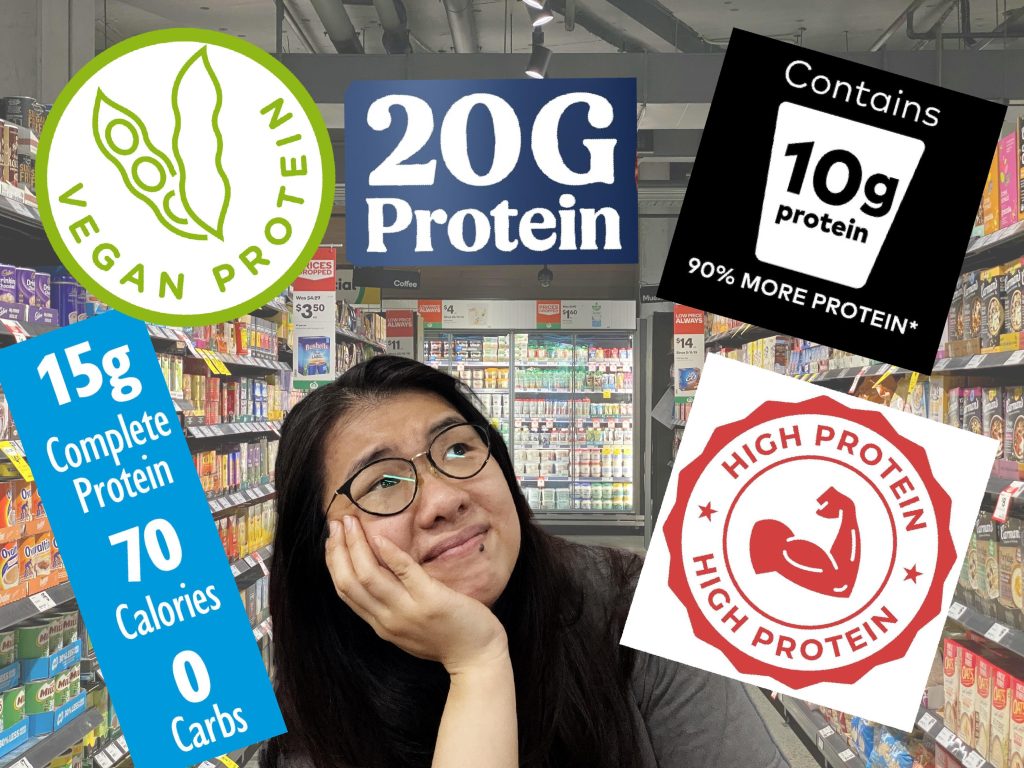
After a short discussion in person, I realised that she simply wanted my opinion on these products because of the labels on the front of the packaging: “15g Protein”, “High Protein”, “Protein Source”. Protein, protein, protein – it’s now become an inescapable label that not everyone understands fully.
Lately, there has been a huge uptick in food brands jumping on the protein bandwagon. Milo has a high protein option in a bottle now. Online grocery platforms even have entire sections dedicated to “muscle building” and “macro-maxing”, filled with food packagings that loudly proclaim their protein content in attention-grabbing fonts.
This marketing strategy has grown rapidly in response to current consumer behaviour. More people are actively making choices to prioritise a high-protein, lower-calorie diet. The market is no longer just for young gym bros. It now encompasses anyone with even the slightest interest in a gym routine – suddenly everyone’s prioritising building muscles, including the auntie who lives next door.
Sometimes, the claims on the packaging may be technically accurate but presented in slightly misleading language. Other times, they are simply marketing gimmicks hiding behind sugar, additives and a flashy label. This is why I tend to ignore the claims on the front, go straight to the nutritional information on the back, and make a decision based on those numbers.
Protein, whether from a piece of meat, or fortified into an oddly textured dessert bar, has always been one of the more expensive parts of a grocery list. Finding a good tub of yogurt at half price, or a protein shake costing less than $3, even on a good discount day, is not exactly common. Understandably, when choosing between similar products, it is easy to be swayed by a cheaper option when it is covered in highlighted numbers (25G PROTEIN!) and all the right words.
So, as you walk through the supermarket aisles littered with booby traps of claims, how do you make better decisions when spending your money on protein products?
Understanding Protein Claims
Before we start comparing protein products, we first need to understand what some of the labels on food packaging actually mean, and what you should look out for.
Under Singapore Food Agency (SFA) regulations, food products can make certain protein-related claims if they meet specific criteria.
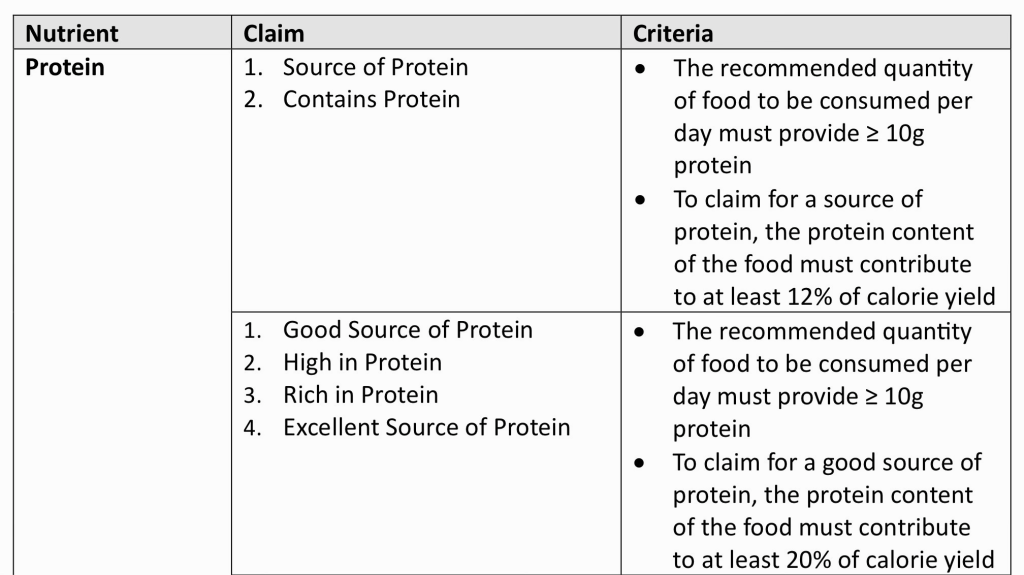
Protein claim criteria under Singapore Food Agency (SFA) food labelling regulations. Source: Singapore Food Agency. [1] “Recommended quantity of food to be consumed” refers to the product’s serving size determined by the producer and reflected on the nutritional information panel.
Let’s do some simple maths based on the criteria above, keeping in mind that 1 gram of protein provides 4 kcal.
“Source of Protein” or “Contains Protein”
For a 200 kcal food product to make this claim, at least 12% of its calories must come from protein.
That works out to:
200 kcal × 12% = 24 kcal from protein
24 kcal ÷ 4 kcal per gram = 6 g of protein
So, a 200 kcal product only needs to contain 6 g of protein to claim that it is a “Source of Protein” or “Contains Protein”.
“Good Source of Protein”, “Excellent Source of Protein”, “High in Protein” or “Rich in Protein”
For a 200 kcal food product to make one of these claims, at least 20% of its calories must come from protein.
That works out to:
200 kcal × 20% = 40 kcal from protein
40 kcal ÷ 4 kcal per gram = 10 g of protein
So, a 200 kcal product only needs to contain 10 g of protein to qualify for these stronger protein claims.
Keep these numbers in mind as we create a protein checklist below.
Protein checklist
Instead of blindly picking products based on whatever claim is printed in the biggest font on the front of the package, you can use the following criteria to decide whether a product actually fits your nutritional needs.
1. Protein content per 100 g, not per serving.
Look at how many grams of protein the product contains per 100 g, rather than relying solely on the stated serving size. A product may appear to contain more of protein simply because the manufacturer’s recommended serving size is actually quite large. Sometimes, this is a method that manufacturers hide behind in order to qualify for nutrition claims that can potentially boost product sales. Comparing products based on a standard weight makes it easier to see which ones are actually more protein-dense.
2. Protein efficiency relative to calories
How much of the product’s total calorie content comes from protein? The calories that do not come from protein will come from fat, carbohydrates and, depending on the product, other nutrients and components. A higher protein-to-calorie ratio may be more useful if your goal is to increase your protein intake without significantly increasing your total calorie intake.
Nuts, for example, are often included into nut bars that can be conveniently labelled as “high protein”.
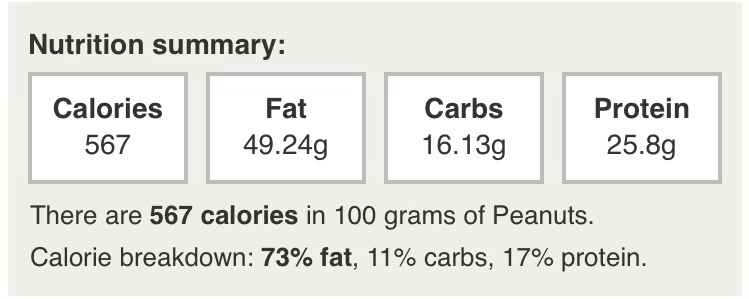
What many people are unaware of is the total fat content present in nuts. 100 g of raw peanuts can contain 25.8g of protein, but has nearly double of fat content at 49.2 g, making up more than three quarters of its calories.
Another way to understand protein efficiency is to compare between two seemingly similar food items. Many people do include milk in their diets as a protein source, sometimes preferring a more delicious option, such as chocolate milk.
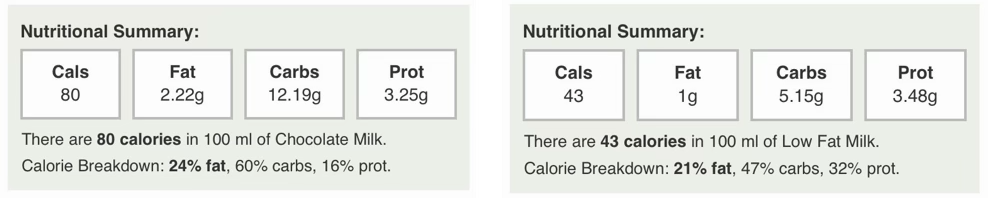
Quite often, more flavour often indicates either a higher sugar or fat content. On the left, chocolate milk contains more calories just because there is an increase in carbohydrate content, likely an addition of sugar. Low fat milk therefore has higher protein efficiency at 32%, whereas chocolate milk is less efficient at 16%, despite having similar protein weightage.
3. Understanding protein quality and sources
When buying a protein-containing product, it’s worth looking beyond the protein claims on the label. Ideally, you want a protein source that provides all the essential amino acids needed to stimulate muscle protein synthesis. As a general guide, look for complete protein sources, shorter ingredient lists, and highly digestible forms of protein.
Proteins, whether from animal or plant sources, are made up of amino acids. Of the 20 amino acids used to build proteins in the human body, nine are essential amino acids that must be obtained through the diet because the body cannot produce them. The remaining 11 are considered non-essential amino acids, as the body can synthesise them.
If your goal is to build or maintain muscle, three essential amino acids – leucine, isoleucine, and valine, collectively known as the branched-chain amino acids (BCAAs) – play an important role in stimulating muscle protein synthesis. Animal-based foods such as meat, fish, dairy, poultry, and eggs naturally contain all nine essential amino acids in sufficient amounts, making them complete protein sources.
Plant proteins are often described as being of lower protein quality, largely because many individual plant sources contain lower amounts of one or more essential amino acids or are less digestible than animal proteins. However, there are notable exceptions. Soy, quinoa, and some pea protein isolates provide a complete amino acid profile, while eating a variety of plant foods throughout the day can also supply all the essential amino acids the body needs.
Finally, it pays to look beyond the front-of-pack protein claim. Some protein supplements have been found to inflate their apparent protein content by adding inexpensive non-essential amino acids. This works because laboratory tests for protein measure nitrogen content, and all amino acids – whether essential or non-essential, contain nitrogen. As a result, these tests cannot distinguish between high-quality complete proteins and added free amino acids. While this practice is uncommon in everyday food products, it has been reported in some protein supplements. If a supplement provides an amino acid breakdown, unusually high amounts of inexpensive amino acids such as glycine, taurine, or glutamine relative to the essential amino acids, this may indicate a lower-quality protein make up.
4. Smaller push/pull factors: nutrients, fibre and cost
Once you have compared the protein content, protein-to-calorie ratio and protein source, the final decision may come down to the smaller details. Does one product contain more fibre? Does it provide additional nutrients? Is the amino acid profile clearly stated? Is it significantly cheaper?
Let’s put this information to the test and see how products making protein claims actually measure up.
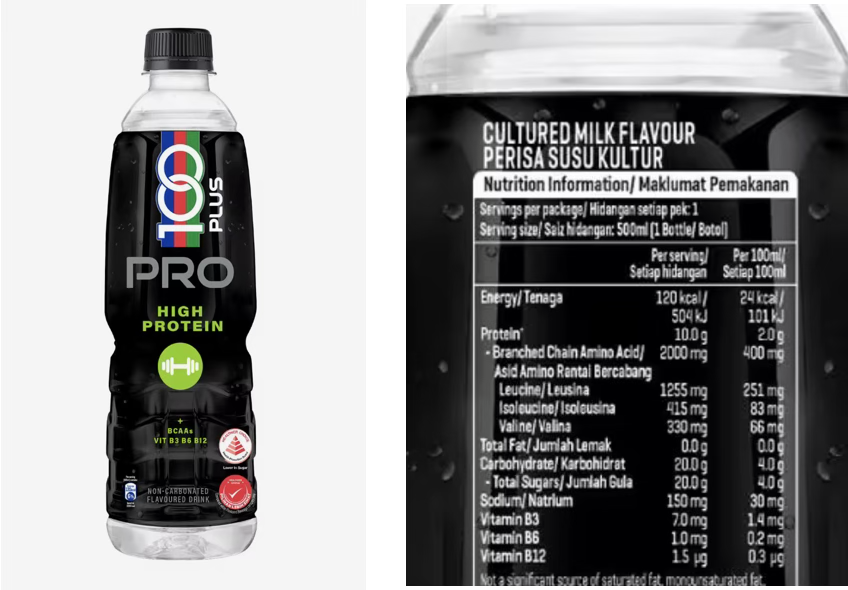
Product 1: 100 PLUS PRO “High Protein” — $3
Pros
– 33.3% protein efficiency: Relatively high protein profile
– Amino acid profile provided
– Actually low in total calories
Cons
– Not particularly cost-effective: At $3 for 10 g of protein, you are paying a relatively high price for a modest amount of protein.
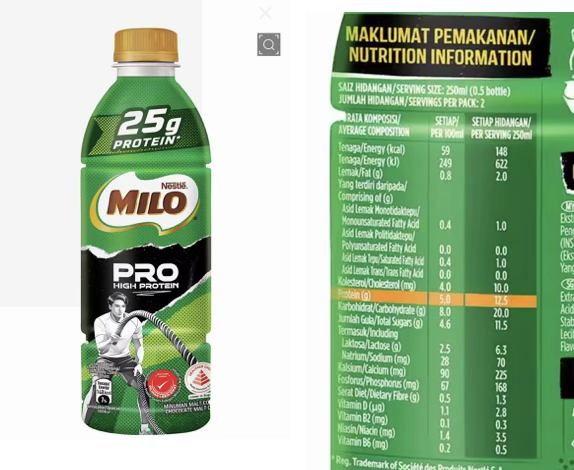
Product 2: MILO PRO “High Protein” — $2.85
Pros
– 33.8% protein efficiency
– Good protein for the price: At $2.85 for 25 g of protein in a single bottle, this is a fairly cost-effective option.
Cons
– High carbohydrate content: Around 54% of the drink’s calories come from carbohydrates. This may be a drawback for consumers following a lower-carbohydrate diet, especially since much of the carbohydrate content appears to come from sugar.
*Potential pro-factor
– Useful for lifters who need more calories or a quick boost of fuel for energy. Higher carbohydrate content may actually be beneficial for people trying to gain weight and build muscle, particularly those who do not mind a little “dirty bulking”.
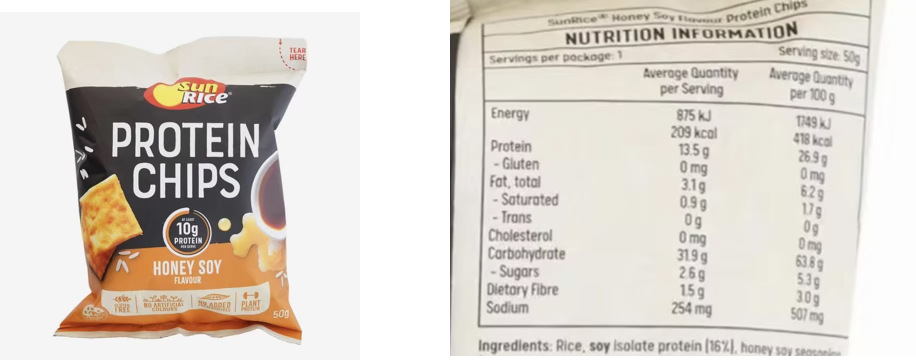
Product 3: SunRice Protein Chips “At Least 10 g Protein Per Serve” — $3.80
Pros
– 25.8% protein efficiency: A reasonable proportion of the product’s calories comes from protein.
Cons
– Not particularly cost-effective: At $3.80 for 13.5 g of protein, this is a relatively expensive way to get your protein, especially when the protein comes from soy.
– High carbohydrate content: The 50 g serving contains 31.9 g of carbohydrates, which account for approximately 61% of the product’s total calories.
– Expensive compared with simpler alternatives: For comparison, a 300 g block of soft tofu, another soy product, costs around $0.90 and provides approximately 30 g of protein, while containing far fewer ingredients.
Final Verdict: The High Protein 100-plus can be convenient low-calorie option, but at $3, it’s not the most economical way to increase your protein intake by a paltry 10 g per bottle.
High protein Milo can be a tasty and convenient high-protein option, but might not be suitable for those on low-calorie diets due to its higher carbohydrate content.
The protein chips snack does come packed with a decent protein profile, but the price and relatively high carbohydrate content make it difficult to justify as a cost-effective protein source.
While these products do provide the amount of protein they claim and may appeal to consumers looking for a convenient, on-the-go protein option, they should not be viewed as a replacement for obtaining protein from high quality, whole food sources as part of a healthy, balanced, and varied diet.
Your TDEE and goals will play a part too
Before you start shopping, it is worth understanding your own nutritional needs as well. Treat it like a guideline for what makes your budget, both in the financial and caloric sense.
There are plenty of online tools that can calculate an estimated Total Daily Energy Expenditure, or TDEE. Get a rough idea of your calorie budget based on your activity levels and goals.
If you need to gain some weight while getting stronger, a protein shake with more carbohydrates at the end of a workout may not be a bad idea after all. On the other hand, if you are trying to watch your calorie intake, you may prefer a yogurt that is lower in calories but has a higher protein-to-calorie ratio.
The right shopping choices will depend on your personal goals too!
HAVE FUN SHOPPING FOR PROTEIN!
Here in Singapore, we are lucky to be spoilt for choice when it comes to shopping for food. There is no doubt that eating well can get costly, but this can be managed with a critical eye and a keen sense for discounted items.
Using a guide such as a protein checklist can also help you navigate through the noise of food companies constantly yelling, “PROTEIN!” at you.
It is all about finding your favourites and building your shopping list as you learn what keeps you motivated. After all, if you have made it this far into the article, you are probably already a little more aware of what you should be feeding yourself.
At the end of the day, if a more expensive flavoured yogurt or a slightly calorie-dense treat motivates you, there is no harm in buying it occasionally if you can work it into your caloric budget. That might even make you enjoy curating your diet’s shopping list a little more!
References:
1. Health Promotion Board. A Guide to Nutrition Labelling for Food Products. Revised August 2024. Available at: https://isomer-user-content.by.gov.sg/484/52300722-8fa4-41aa-a3b3-4bed2258b59c/a-guide-to-nutrition-labelling-for-food-products-(aug24)-(3).pdf