
From time to time, I get asked this question, “Should I or do I need to take a deload week?” and it usually comes from clients who feel like the weights have been feeling pretty heavy.
A deload week is a week whereby the intensity and/or volume is reduced to allow some fatigue to dissipate and give the lifter more recovery. Sounds like it makes sense to do this, especially when the weights are feeling really heavy, right? Well, no.
Why you don’t need one
If you’re training to get stronger for life – be it to maintain your physical independence into your later years or to increase your bone density and strength, a planned deload isn’t necessary, even when the weights are feeling heavy. Here’s why.
When you first start training, we’ll put you on the Novice Linear Progression (NLP). On this program, you’ll add weight to the bar on every single session. Unsurprisingly, you’re not going to be able to do this forever. As you get stronger, progress gradually slows down. The stronger you become, the longer the stress-recovery-adaptation cycle gets. More training stress is required to drive adaptation, and that in turn requires more recovery.
Instead of being able to add weight to the bar on every session, you’re only able to increase the weight on every alternate session. Then every week, then every fortnight, then every month and so forth. This is normal and expected.
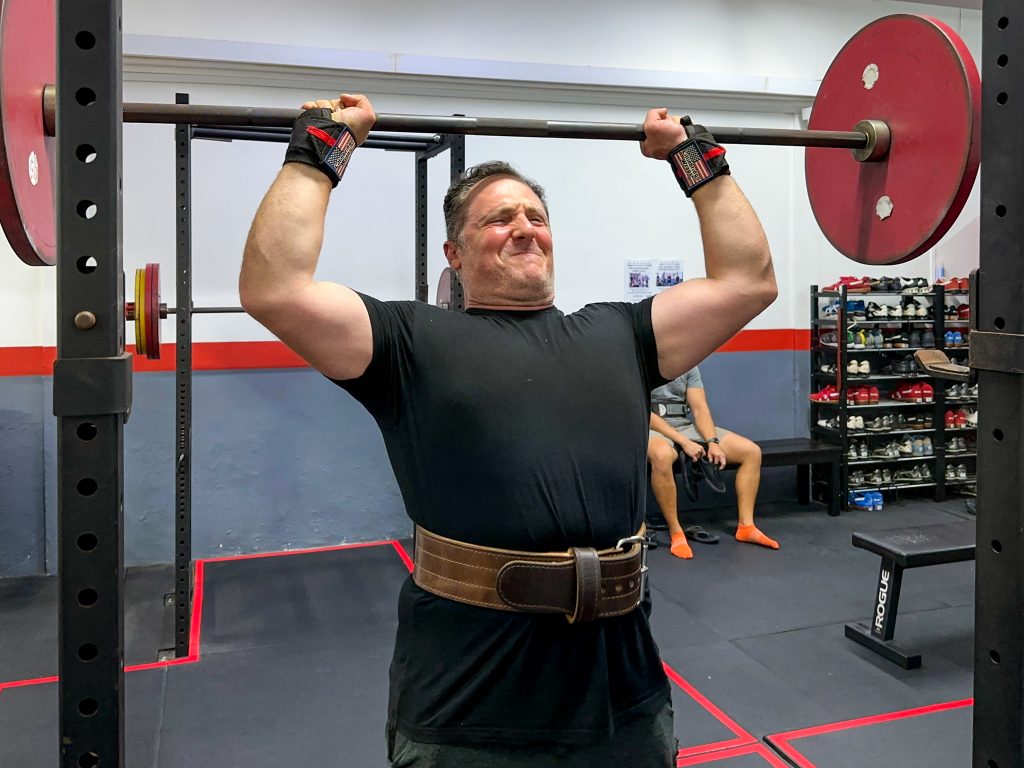
As you progress along your training career, the bar will start to feel heavier and heavier, and you will feel the bar speed slowing down session after session. Each rep gets harder and harder to complete. You feel like there’s no way that you can increase the weight any further, and that you’ve hit your limit.
Your feelings are not data
Feeling like the weights are heavy isn’t a reason to deload. More often than not, how you feel under the bar isn’t an accurate representation of your actual performance, but I digress.
Program progression, not deload
While it’s expected that the weights feel very heavy and that training gets harder as you get stronger, we don’t want every rep to be a ten out of ten effort and every set to be a massive grind. That’s not wise nor is it sustainable. When we notice more sets and reps become grindy, that’s not a signal to program a deload for that lifter but rather a sign that the current programme is coming to the end of its efficacy and needs to change soon to something that’s appropriate for the lifter’s current rate of adaptation.
We might reduce the frequency of the heavy sessions and space them further apart or reduce the number of heavy sets. We might adjust the rep ranges. We might introduce more variation in loading. The details depend on the lifter but the basic premise never changes – training stress needs to keep increasing over time to continue getting stronger.
An experienced coach sees this coming and makes the change before the lifter misses a lift. In this situation, missing a lift is not a catastrophe but it is useful information that tells us we waited slightly too long before adjusting.
Life will programme the deload for you
Here’s the other thing. You don’t need to plan a deload because life will hand you one whether you want it or not.
Gout attack. Surgery. Crazy work deadlines. Holidays. Kids or grandkids needing you. A last-minute business trip. These things happen to all of us, and they happen more as we get older. For our clients, the occasional health disruption is simply a reality of life. The universe is very reliable about arranging these deloads for you.
When our clients get a nice long unbroken run of consistent training, they see their strength going up and are able to break their previous personal records. After all, consistency is the single biggest driver of long-term progress. But unfortunately, nobody gets an unbroken run forever. Careers and families take priority. Health issues pop up. That’s life, and we work around it. If there are disruptions that come along, whether they be planned or not, we do the best we can with what we have so that they can either continue to get stronger, maintain their strength or the worst case scenario of hanging on to as much strength as they can for as long as possible.
Some of our clients travel frequently for business and we’ve written about how to train while travelling. However, we understand that not everyone has the luxury of time to train when travelling on business. So when they’re back in Singapore, we strive to get them as strong as possible so that even with the inevitable detraining from the trip, they return to a higher baseline than the time before. Progress becomes a teeter-totter for these clients but that’s far better than not training at all. A little bit of forward progress, even if it comes in fits and starts, compounds over months and years into something meaningful.
What happens when you miss training
When you come back after a break – whether it’s due to illness or a business trip, I usually take some weight off from your last session and we ramp back up. Whether I take weight off or not, and if I do, by how much, depends on how long and why you were out, your age and sex, how advanced you are, amongst other factors.
The time off from training and a few lighter sessions is your deload.
Some clients feel deflated when I tell them we have to pull the weight back when they resume. I understand how it feels. It sucks to have to “regress” and go back to lifting a weight that’s lower than what they were lifting a couple of weeks ago. But I’ll tell you the same thing I tell all of them – in the grand scheme of your training career, this brief, unplanned setback is nothing more than a blip. A few months or a few years down the road, you won’t even remember it. You’ll be back to your previous strength levels and surpass it faster than you think.
The clients who get this, who understand that the long game is the way to go are the ones who make the most progress. They come back, do the work, and trust that the process will take care of them. And it does.
Is there ever a need for a deload?
With everything being said, it’s not that I don’t believe in deloads but rather their purpose is not applicable for the overwhelming majority of our lifters. There is a place and time to program a deload and that is for competitive athletes.
For lifters who compete in strength sports like strengthlifting, strongman or powerlifting, the pre-meet deload (more commonly known as a taper) allows some fatigue to dissipate so that the lifter can maximise their performance on the platform. After the meet, I’ll program a light week to give the lifter a psychological break from heavy training, and to account for some detraining effect from the taper before ramping back up the following week.
If the client competes in other sports like triathlons, roughly the same concept applies but instead of tapering only a week or two before the competition, I’ll pull back on the intensity and volume when they start to ramp up their training for their sport. From then, it’s trying to hold on to as much strength as possible without it interfering with their overall recovery while they focus on their sport-specific training.
Apart from these scenarios, it isn’t necessary to intentionally plan for deloads.
For the competitive athlete, a planned deload has its place. For those who train to stay strong for life, be physically independent and healthy as we get older, which is most of us, there isn’t a need to plan for a deload because life will plan one for you whether you want to or not.