
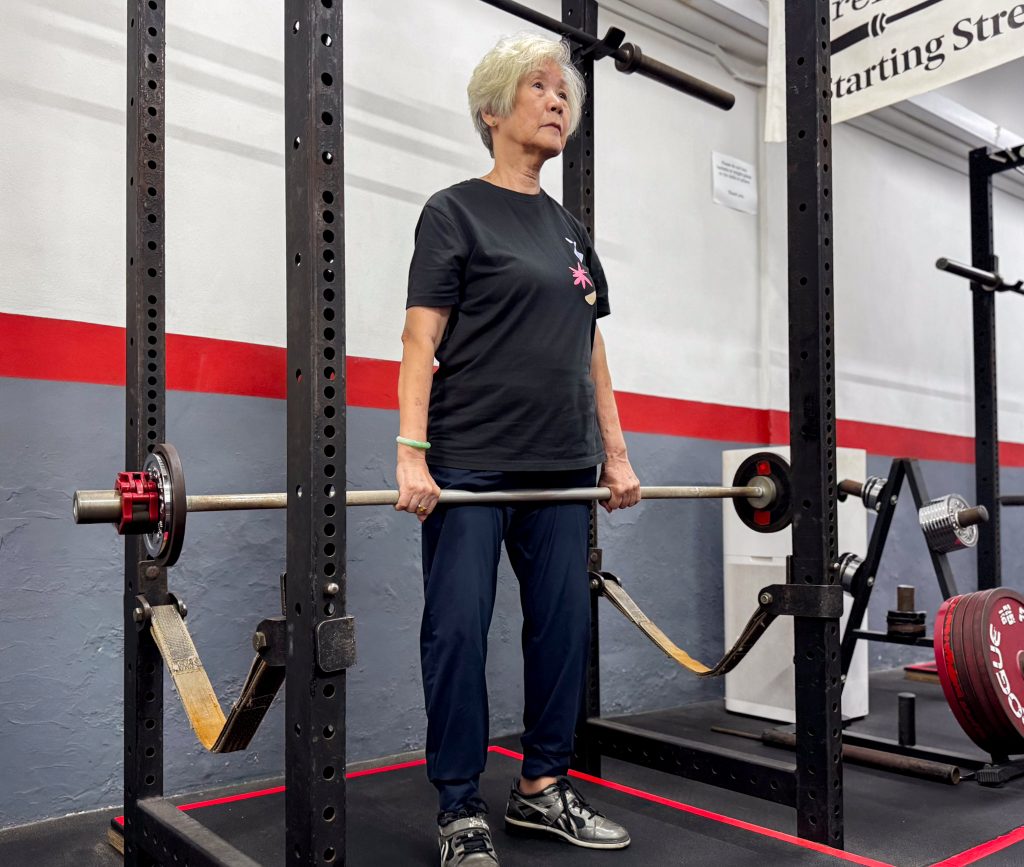
The internet is oversupplied with all sorts of training programs, fitness routines, protein recipes, and inspirational fitness influencers. There are guides to a million and one things you can do in the gym, to get bigger and stronger – but what about a guide on convincing an elder to start going to one?
It almost sounds banal to discuss “strategies” for persuading your silver-haired family member to consider barbell training as perhaps the most effective modality of exercise for preserving quality of life. Take it from me, I lived to tell the tale now. Before my own mother stepped into Hygieia, there were days I feared I had talked her ear off about strength training so much that she had permanently shut the door on the idea. I was almost convinced she would never touch a barbell in her life.
If you’ve ever tried talking an elder into going to the gym, you would know that this process can feel booby-trapped to fail from the very beginning. It’s therefore unsurprising that many clients have approached me asking for tips on how to help their parents, spouses, or older relatives take that first step.
So, if this is the hill you’re trying to conquer, fret not. Here is a short, anecdotal guide – drawn from my experience as both a coach and the daughter of a senior lifter who now trains consistently.
Have Tailored Conversations About Strength
As someone who lifts, you already understand the process of progressive overload. Lift weights. Eat well. Recover. Add more weight next session. Repeat. The outcome is stronger muscles and better performance. However, for most seniors, it is unlikely that they will appreciate or understand strength training through that lens. The focal point of such conversations should be around their quality of life and physical independence, things that are more tangible that affects their living experience.
Rather than speaking about breaking personal records or the importance of gaining muscle mass, shape the discussion around what being stronger can provide, and how their lives could be negatively impacted further if they continue to ignore its importance.
Highlight Things That Matter To Them
Are they thinking of travelling, but worry they no longer have the physical capacity for long-haul flights, heavy luggage, or endless walking through airports?
Do they still enjoy golf, gardening, hiking, carrying grandchildren, cooking elaborate meals, or simply walking independently to the market?
At this stage of their lives, strength training is not really about barbells. It is about preserving access to the things that make life enjoyable. A stronger squat means getting up from the toilet without assistance. Better grip strength means having full control of the things you can do with your hands. A stronger body and increased physical confidence could be the difference between declining a holiday invitation and saying yes to it. The key is making strength training relevant to their goals, which often does not involve squat or deadlift numbers.
Occasionally, Negative Conversations Work Too
Not every conversation needs to be framed around aspirations. Sometimes, harsh reality itself can be sufficiently persuasive. Topics like falls, frailty, loss of mobility, osteoporosis, chronic pain, or declining independence are unfortunately common issues many seniors either experience personally or witness in their peers. This style of discussion needs to be visual and relatable. Talk about the inability to climb stairs, struggling to get off the floor after a fall, or needing assistance for menial daily tasks that once used to be automatic.
Quality of life = health span
Health span, which is number of years that an individual lives in good health devoid of chronic illness and disability, is directly influenced by that individual’s ability to maintain physical and mental well-being as they age. As modern technology and healthcare progresses, life expectancy continues to increase among developed nations like ours, but does that mean this longer life is better lived than before? Recent statistics suggest that life expectancy in good health and quality of life continues to stagnate and lag behind, which means more people may possibly spend an increasingly larger part of their final decades battling frailty, weakness, physical limitations, gaining dependence on caregivers and family members.
Unfortunately, most people do not seriously consider these possibilities as outcomes that could happen to them until it is far too late to do anything to improve their quality of life. While doom and gloom should not dominate every such conversation, stoking a small, healthy amount of fear can sometimes be enough to create a little sense of urgency. They should be encouraged (or gently threatened) to take action while still physically able and in good health!
Show Them Elderly Success Stories
Many elders reject strength training based on a predictable list of assumptions. As coaches, we’ve heard it all:
“I’m too old.”
“I’m too weak.”
“The gym is for young people.”
“It’s too late for me.”
To help shift their perspective, it can be incredibly effective to show them success stories featuring someone with a similar profile – similar age, gender, starting point, or limitations. Seeing a peer working hard at the gym often makes strength training feel substantially more believable and attainable.
At Hygieia, we have worked with many masters lifters well into their 70s, 80s, and beyond, so we are never short of examples. Many started cautiously, unsure if training was even “for people like them”, before finding themselves moving better, feeling stronger, and rebuilding confidence in their bodies. Many have successfully reversed osteoporosis. Others discovered that simply getting stronger had meaningfully improved their day-to-day quality of life.
Here are a couple of success stories we love boasting about:
Patricia Meyer
Raj Grover
Finding The Right Coach At The Right Gym
If your elder is even remotely open to the idea of training, do the legwork of sourcing for the ideal coach for them. Among the vast ocean of coaches, instructors, personal trainers, and fitness professionals, it is easy for anyone – especially an older adult unfamiliar with gyms – to get completely lost in the sauce.
• A good coach for seniors should have more than technical competence. Look for someone who:
• Demonstrates a deep understanding of age-related issues and common limitations
• Can appropriately triage setbacks, discomforts
• Coaches in a way the elder can actually understand and relate to
Whenever possible, you should scrutinise and interview the coach extensively. A competent and professional coach should be able to address your concerns thoughtfully and answer questions with well-informed and educated answers. Also, communication matters more than people realise. A good coach, can adapt their language, pacing, or interpersonal style to an older adult, making the experience less intimidating. This may be difficult to discern at first, so request to observe a coached session if it’s possible.
Beyond the coach, the gym’s equipment, environment and culture can make a huge difference. A gym that actively welcomes older adults should be equipped to meet any senior at their present strength level, using barbells as light as 5kg and weight increments as low as 0.25kg, like our Hygieia gyms.
Not to toot our own horn, but since you’re already here reading this article, you should know that Hygieia is affectionately well-known in the industry as the “gym for elders” for good reason. Our coaching team proudly flies that flag high. The whiter your head of hair gets, the harder we will work to help you get stronger, and we have the members to attest to that!
Day Zero: The Non-Obligatory Gym Visit
If the elder is willing to physically step into a gym, congratulations! This is your opportunity to curate the experience together with the coach you have carefully handpicked for them. Arrange a casual, non-obligatory visit that includes an informal chat with the coach. Whenever possible, have them observe a live coaching session – ideally featuring lifters who resemble them in age, background, or physical profile.
At the right gym, there is a good chance that clients are more than happy to chat about their own experiences too. Hearing another senior casually say, “I also thought I was too old for this, but now I’m deadlifting my own bodyweight pain-free,”can be surprisingly reassuring, and they’ll likely share about something that changed positively in their lives – like being able to hike a mountain confidently on a holiday.
Also, if there were any amount of fear regarding the weights being “too heavy”, ask them what’s the heaviest they’ve lifted! For what it’s worth, the numbers might still sound heavy to someone who’s yet to train, but they are all indicators of improved strength and ability to do things for themselves. Every time they break a personal record on the squat, deadlift, or presses, it translates directly to their physical independence – from simple acts like standing up unassisted and lifting heavy crockery to an overhead shelf, to having enough muscular insurance for recovering from a bad flu or a fall.
Watching people like themselves train can make strength training feel substantially less intimidating and far more believable. The barbells begin to look less like hostile foreign objects reserved for the young and hyper-athletic, and more like tools being used by ordinary people – people just like them – who are simply trying to get stronger and live better.
Day One and Beyond: Training as a Ritual
Now that the first hurdle of acceptance is out of the way, the bigger challenge begins: keeping their training consistent.
Sharing the training sessions together can be a huge source of encouragement, while also giving both of you a reason to spend more time together. Building a weekly routine around this shared activity can quickly reinforce a habit they have motivation to maintain. Your presence adds accountability, familiarity, and gives them something to look forward to – assuming they actually enjoy your company, of course.
If they are receptive to training with others, explore group class slots frequently booked by regular clients of similar age groups or profiles. There is something uniquely motivating about training alongside people who understand the same aches, milestones, limitations, and victories. With time, the gym session evolves into more than just about training and barbells. Casual chats in between working sets, cheering one another through tough reps, checking in about grandchildren, holidays, or doctor’s appointments – suddenly, training becomes a social ritual rather than another health obligation.
Above All, Be Patient and Understanding
Speaking from personal experience, it took months of revisiting the topic of strength training – accompanied by many weeks of determined feet-dragging – before my mother decided that barbell training might be the medicine she needed most for restoring and maintaining her physical independence and freedom.
Across the few years of training my mum accumulated, and through the two powerlifting meets she took part in, her greatest joys did not come from medals, records, or lifting milestones. Instead, nothing makes her happier than her regained walking stamina and the confidence to walk up a flight of stairs freely without worrying about a fall.
There are real fruits to the hard work that is strength training, and the process unfolds one baby step at a time before ever stepping into a gym. Wait for them to give you the green light for Day Zero – and when they do, let us coaches help them build strength, confidence, and a genuine sense of belonging at the gym. Lastly, consider this a permanent open invitation: you and your beloved elder will always be welcome to drop by during one of my mother’s training days. Chances are, after seeing her in action, they will probably decide to give an intro class a go!